
- Sep 15, 2024
- 8 min read
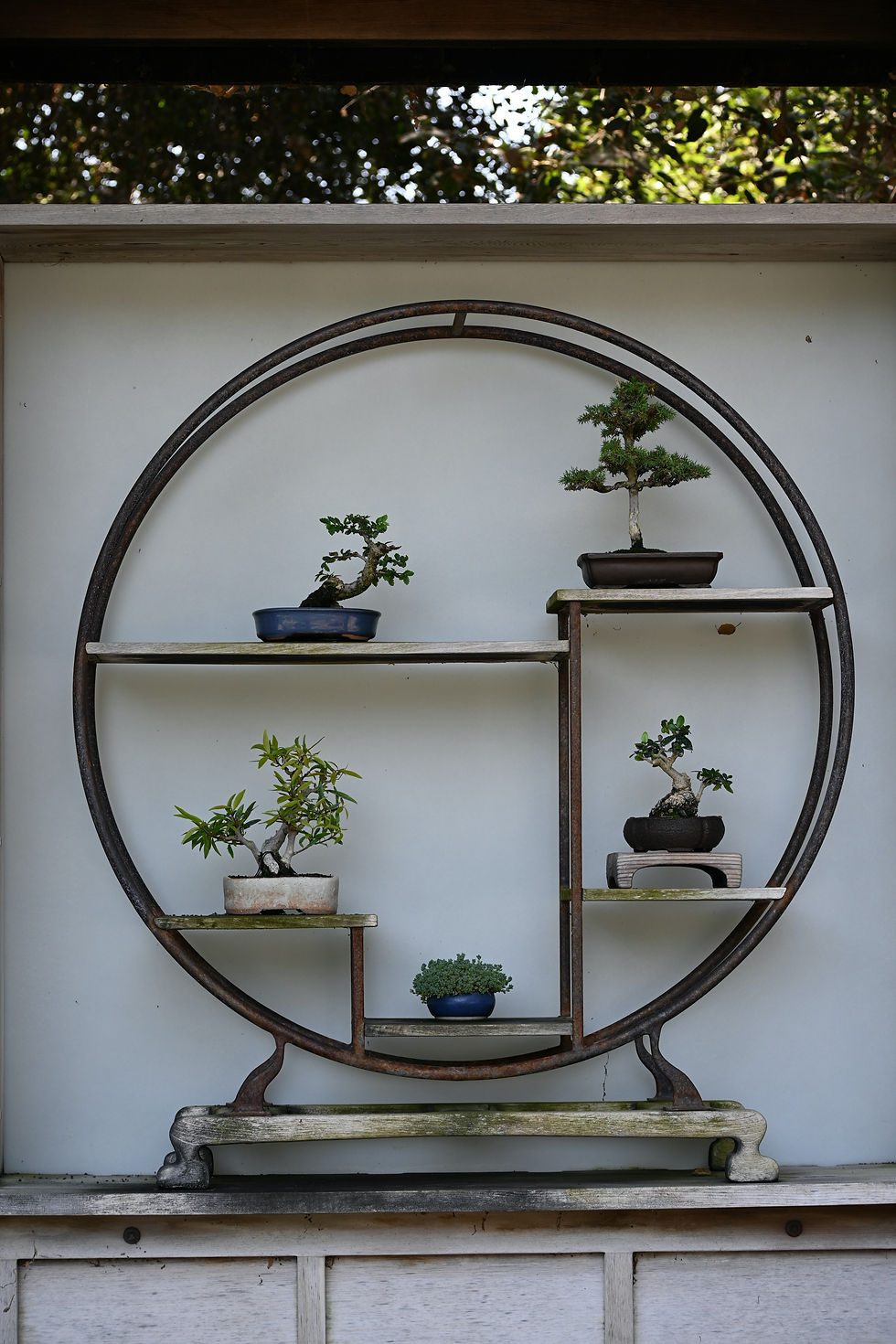
The Art of Bonsai: Mastering Exhibition Techniques and Aesthetics
The art of bonsai is a unique form of horticulture that involves growing and shaping trees into miniature forms that resemble natural landscapes. Bonsai exhibitions culminate the growers' work, where the trees are evaluated, admired, and appreciated for their aesthetics, technique, and adherence to tradition. Organizing such an exhibition requires precise preparation of the trees themselves and careful selection of accessories, tables, and surroundings. This article discusses bonsai exhibition techniques, criteria for selecting trees for exhibitions, differences between exhibitions held in Japan, Europe, and other parts of the world, and considerations for selecting tables and accents to accompany the display. The efforts of young and less experienced bonsai enthusiasts, who organize their smaller exhibitions to popularize this art, will also be described.
Selecting Trees for Bonsai Exhibitions
The process of selecting trees for an exhibition is complex and requires the evaluation of many factors. First and foremost, the tree's health, aesthetics, adherence to bonsai principles, and stylistic relevance must be considered. The tree should be fully formed, with a harmonious structure of branches, leaves, and roots.
Unveiling the Key Selection Criteria
1. Tree Health
The tree must be in excellent health, and free from signs of disease, pests, or mechanical damage. The leaves should be green (or appropriately coloured for the season) and vibrant, while the roots should be strong and well-established.
2. Aesthetics
The tree should present itself harmoniously, and its form should reflect the chosen bonsai style. Every element of the tree, from the root structure to the branch arrangement, must align with the artist's intention.
3. Style
Bonsai can be shaped in various styles, such as formal upright (Chokkan), informal upright (Moyogi), cascading (Kengai), or literati (Bunjin-gi). The exhibition judges the tree's compliance with the chosen style and the artist's interpretation.
4. Experience
Older trees with a well-defined history and features indicating their age are often preferred at exhibitions. The tree should present a natural appearance as if it came from nature and was not shaped by human hands.
Decision on Tree Selection
The decision to select a tree for an exhibition is often made in consultation with experienced bonsai masters or judges, who help assess whether the tree is ready for display. In some cases, a tree may be prepared for several years before it is exhibited to achieve the desired shape and form.
The Diversity of Bonsai Exhibitions Around the World
The organization of bonsai exhibitions varies by region. In Japan, where the art of bonsai originated, exhibitions are more ceremonial and tradition-oriented. In Europe and other parts of the world, bonsai exhibitions are more diverse in style and form, often combining tradition with modernity.
Bonsai Exhibitions in Japan
In Japan, bonsai exhibitions are deeply rooted in culture and tradition. They are organized with great care, and every element of the exhibition is thoughtfully arranged and holds symbolic meaning.
1. Tokonoma
A traditional Japanese bonsai exhibition takes place in a tokonoma — a special alcove in the home where bonsai is displayed alongside a calligraphy scroll (kakemono) and a flower arrangement (ikebana). Each element of the alcove has its significance and contributes to a cohesive whole.

2. Formality
Exhibitions in Japan are highly formal, and trees are judged by bonsai masters according to strict criteria. High tree quality and adherence to tradition are the most important evaluation factors.
3. Selectivity
Only the best trees, which have undergone a rigorous selection process, are chosen for exhibitions in Japan. Many of them have been carefully cultivated over generations and represent the highest level of bonsai art.
The Essence of Bonsai: Celebrating Prestigious Exhibitions in Japan
In Japan, the most prestigious bonsai exhibition is Kokufu-ten, held annually in Tokyo at the Tokyo Metropolitan Art Museum. It is the oldest and most respected bonsai exhibition in the world, gathering the best works from across the country. Another significant event is Taikan-ten in Kyoto, held at the Kyoto International Exhibition Hall (Miyako Messe). Although younger, this exhibition is also one of the key events on the bonsai calendar, showcasing a variety of tree styles and species.
Modern and Regional Twists in Bonsai Exhibitions Across the Globe
In Europe and other parts of the world, bonsai exhibitions often take on a less formal character. While many are based on Japanese traditions, they also incorporate modern and regional elements.
1. Variety of Styles
In Europe, unlike in Japan, it is common to find exhibitions displaying trees in various styles, not necessarily related to Japanese tradition. Both classic forms and more modern interpretations of bonsai can be found.
2. Exhibition Venues
In Europe, exhibitions often take place in galleries, museums, and even outdoors, allowing for greater freedom in the arrangement and presentation of trees. Depending on the location, exhibitions can range from highly formal to more relaxed and artistic.
3. Innovations
European bonsai growers often introduce innovative elements to their exhibitions, combining bonsai with other art forms such as sculpture, photography, or multimedia installations. This gives exhibitions a unique character.
Top Bonsai Exhibitions in Europe: Noelanders Trophy and Ginkgo Bonsai Award
One of the most important bonsai exhibitions in Europe is the Noelanders Trophy, held annually in Belgium, which attracts bonsai enthusiasts from across the continent. This exhibition is known for its high level of displayed trees and international character. Another important event is the Ginkgo Bonsai Award, also organized in Belgium, held in the picturesque Ginkgo Bonsai Centre garden and recognized as one of the best places to admire bonsai in Europe.
In Italy, the Crespi Cup is one of the oldest and most prestigious bonsai events in Europe, organized by the Crespi Bonsai Museum. Besides showcasing trees, this exhibition offers a rich educational program, workshops, and seminars led by leading bonsai masters.
The Growing Appeal of Bonsai: A New Generation's Approach
The art of bonsai, although often seen as a pursuit for experienced masters, is also gaining popularity among young and less experienced enthusiasts. To popularize this art form and inspire others, they often organize smaller, local exhibitions that differ from large, formal displays.
Characteristics of Smaller Exhibitions
1. Local Scope
Smaller bonsai exhibitions organized by young enthusiasts are often local and take place in bonsai clubs, schools, cultural centres, or even private gardens. Their goal is not only to showcase trees but also to integrate the local bonsai-loving community.
2. Lack of Formal Requirements
These exhibitions often do not adhere to strict criteria for tree selection and accessories. Young enthusiasts can showcase their work regardless of their skill level or adherence to traditional standards. The expression of the artist's vision and passion for bonsai is more important.
3. Experiments and Innovations
Youthful bonsai growers eagerly experiment with form and style, making their exhibitions more diverse and creative. They often present innovative approaches to bonsai, combining tradition with modernity, and attempting to adapt bonsai to contemporary art trends.
Exhibitions organized by young bonsai enthusiasts often have an educational character as well. They are often accompanied by workshops, lectures, and tree-shaping demonstrations aimed at attracting new people to this passion. Bonsai clubs, where young growers gather, play a key role in popularizing bonsai art among the broader public.
The Impact of Bonsai Clubs in Cultivating a Thriving Community of Enthusiasts

Bonsai clubs are the social hubs for enthusiasts of this art. They host regular meetings, exchange experiences, and organize smaller exhibitions and workshops. These clubs play an important role in the development of bonsai art at the local level, helping new members develop their skills and deepen their knowledge of bonsai.
1. Community
Bonsai clubs are primarily places where people with similar interests can meet, exchange experiences, work on trees together, and participate in various events.
2. Mentoring
Many bonsai clubs offer their members the opportunity to learn from more experienced growers. This form of mentoring allows young enthusiasts to develop their skills faster and better understand bonsai shaping principles.
3. Exhibition Organization
Bonsai clubs often organize their exhibitions, giving members the chance to showcase their trees to a broader audience. This allows young growers to gain valuable experience in preparing trees for exhibitions and to compare their work with others.
4. Bonsai Promotion
Through the activities of bonsai clubs, this art form becomes more accessible to a wider audience. Club-organized events, such as open days, tree-shaping demonstrations, or workshops, attract new people who may become interested in bonsai and join the community of its enthusiasts.
Enhance Your Space with Stylish Tables and Accessories
A key element of any bonsai exhibition is the appropriate selection of tables and accessories, which emphasize the aesthetic qualities of the tree and create a harmonious composition. Bonsai tables are not only the base on which the tree is presented but also an important part of the composition that contributes to the overall visual appeal of the exhibition.
1. Style and Material
Bonsai tables should match the character of the displayed tree. Traditional tables are made of wood and have a simple, elegant form that does not overshadow the tree but complements it. The colour and finish of the table should harmonize with the colour of the pot and the tree's bark.
2. Height
The height of the table is chosen so that the tree is presented at an appropriate level, allowing the viewer to fully appreciate its form and structure. A table that is too low may make the tree difficult to view, while a table that is too high may disrupt the composition's proportions.
3. Form
The table's form should be simple and elegant, so as not to distract from the tree. Popular tables have a rectangular shape with subtly profiled legs that emphasize the bonsai's natural character. In more modern exhibitions, tables with non-standard shapes and forms can be used.
4. Compatibility with Tree
The table should emphasize the tree's qualities, not dominate or overshadow them. The form, colour, and finish of the table must harmonize with the tree's overall composition and the exhibition's style.
Enhance Your Style with Accessories and Accents
In addition to the table, other accessories and accents are important elements of bonsai exhibitions. These may include calligraphy scrolls, flower arrangements, stones, or small figurines that complete the exhibition's composition.
1. Scrolls and Calligraphy
A typical element of Japanese bonsai exhibitions is the use of calligraphy scrolls, which are placed next to the tree. These scrolls usually depict poems, wise sayings, or nature scenes that complement the bonsai's character. The scroll's selection should match the tree's style and the exhibition's mood.
2. Flower Arrangements

Flower arrangements, such as ikebana, are also often used in bonsai exhibitions. Flowers and plants placed next to the bonsai should match its character and form a harmonious whole with it.
3.
Other accents can include stones symbolizing mountains, rivers, or lakes, as well as small figurines, often depicting animals or people, that add a narrative to the exhibition. The use of these elements should be subtle and thoughtful, ensuring they do not overshadow the tree itself.
4. Seasonal Accents
The use of seasonal accents, such as blooming flowers in spring or dried leaves in autumn, can also be a valuable addition to the exhibition. These elements emphasize the passage of time and changes in nature, which are closely related to bonsai art.
Wrapping Up the Main Points
Bonsai exhibitions are a unique opportunity to showcase the best works of art in this field. The process of selecting trees, accessories, and tables requires careful thought and experience to create a harmonious and aesthetically pleasing composition. Bonsai exhibitions around the world, whether in Japan or other regions, reflect the diversity and richness of this art form, combining tradition with modernity. They also allow young and less experienced enthusiasts to share their passion and creativity, contributing to the ongoing development and popularization of bonsai art.

Welcome to Connaught Bonsai! 🌱
I'm glad you've found your way to our space dedicated to the art of bonsai. If you have any questions about the club, our events, or workshops, or need advice on bonsai care, feel free to send a message!
I'll do my best to respond as quickly as possible.
Best regards,
Marek Zemla


